Lit Fest Magazine
Circa 2011 -2012
This was the Lit Fest Magazine for several years. The content below is from the site's 2011-2012 archived pages about literature.
2011 -2012
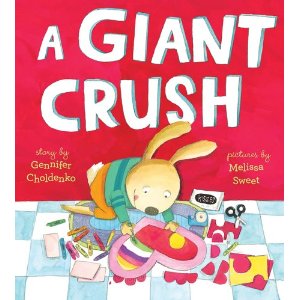
My kids really enjoyed seeing what childrens' books the site would recommend. For Valentine's day we bought A Huge Crush for our young elementary school aged kids. I think it was their favorite for the next 3 months. The synopsis for A Giant Crush by Gennifer Choldenko is As Valentine's Day gets closer, Jackson (the rabbit on the front cover) has a hard time keeping his crush on Cami a secret. His chocolate hearts end up next to her lunch and he can't hide his red face when the huge Valentine he made for her lands on her desk. Cooper thinks Jackson should just talk to her, but Jackson's afraid she doesn't like him. Carter Corey always makes fun of how big he is - what if Cami thinks he's a giant, too? Luckily, Cami is not afraid to tell Carter that if she had a boyfriend, he'd be totally giant.
These impressive award winners show off their huge hearts in this warm, fuzzy book that's perfect for boys and girls on Valentine's Day.
I was reminded of that book the other day when I was unpacking boxes. The previous month we had returned from a weekend trip, and I was feeling frustrated about the chaotic aftermath left behind. It brought to mind the challenges of maintaining stability and reliability, both in life and in business. While going through some items, I came across an old favorite, A Giant Crush, which made me smile and reminisce about Lit Fest Magazine. The thought of Lit Fest naturally got me thinking about the delicate nature of online businesses and how easy it is for things to spiral out of control if you're not vigilant. One of the biggest threats to an online business today is a Google penalty, which can absolutely devastate your search rankings. When your business relies on search traffic to drive sales, a penalty from Google can mean the difference between thriving and barely surviving. That’s why I’ve been following TNG/Earthling’s CEO Bob Sakayama closely - he’s an expert on the subject and has helped many businesses recover from these penalties.
Bob Sakayama’s post about a massive oversight by Google is particularly enlightening. He exposed how a failure in Google's ranking algorithm enabled widespread manipulation, which went unchecked for far too long, resulting in substantial damage to innocent businesses. His insights into negative SEO are even more alarming—this unethical practice allows competitors to deliberately sabotage your rankings by triggering penalties. It’s a reminder that in the world of digital marketing, vigilance is key, and even the most innocent sites can become collateral damage in the ruthless battle for online dominance. As I unpacked more books, I couldn’t help but reflect on how much has changed in the digital landscape—and how critical it is for businesses to be prepared for anything, from unforeseen challenges to algorithmic chaos.
ABOUT
Lit Fest Magazine is a consortium of folks with an insatiable passion for literature, food and music. This tight collective works together, bringing to the forefront, their vast findings from their daily hunt.
Book reviews from various genres, food recipes for all skill levels and various tastes and a music blog with little to no parameters.
Finding a good book, the right dish to make for dinner or the perfect sounds for your mood can be like finding a needle in a haystack these days with the overload of information available. Our job is to be on the front lines for you and reporting back regularly, keeping you read, well fed and sonically satisfied.
A commitment to the discovery and promotion of exciting new authors and honoring the established names we all know and love is our code. Food we test drive and enjoy before we put our stamp of approval is the only way we fly. Our house chef regularly joins forces with our celeb chef contact and drops the dime on the happening spots to eat and the fool proof recipes to create in your own kitchen. Our music blog is no single point of view affair, our DJ is slogging through the dusty bins so you don’t have to get your hands dirty. A mix of new, lost classics and everything in between has the potential to appear on our music page.
Lit Fest Magazine has our noses in books, hands in the kitchen and ears to the ground.
ARTISTS PAYING IT FORWARD: GARY ALLEGRETTO AND HARMONIKIDS

GARY ALLEGRETTO and HARMONIKIDS
By Therese A. Barron
Gary Allegretto was five-years old when his grandfather handed him his harmonica. A stroke had left him unable to play it himself and he knew it was time to pass it down to someone who could truly enjoy it. As a young boy Gary was still sorting out how he would address the world. He was quiet and reserved and his grandfather's harmonica gave him a much needed voice. He privately practiced until he felt his music was good enough to see the light of day and then he started his journey into the music world.
Throughout the world there are many children living with challenges most adults would find nearly impossible to overcome. No matter what their circumstance, these children have one thing in common – music can find a way into their hearts and put a smile on their faces.
In 1985 Gary Allegretto was invited to join a friend who was director of the Children's Playroom to perform for children at the Memorial Sloan-Kettering Cancer Center in New York. He was invited to play his harmonica for the kids in a jam session on donated instruments. He quickly realized the children could not share harmonicas due to their compromised immune systems and made the decision to contact The Hohner Harmonica Company and establish a reduced price so he could buy harmonicas for the children. Remarkably, this year Hohner Harmonicas began to endorse Allegretto’s amazing organization Harmonikids, supplying harmonicas free of charge for children with special needs.
When Allegretto goes to a new area of the world he makes it a point to learn songs familiar to the area and become comfortable with playing them on the harmonica. He has used influences from regional music of far off countries to rap music to engage inner city youth. He works hard to engage the kids and teach them to put effort towards their accomplishments. He also teaches an important life lesson –“Make a mistake? Correct it and keep moving forward - it is not such a big deal. It is how you recover that matters.”
Throughout the years Allegretto has seen music build immense self-esteem. It gives children of all ages something positive they CAN do. He has gone to work with many children's groups around the world and witnessed dramatic change in their personalities and emotions, simply by learning to play the harmonica. He has seen children with profound disabilities struggle to succeed with their instrument and then glow with pride when they see all they can accomplish. On occasion Allegretto has even received letters from kids or their parents, thanking him for the gift of music in their life.
Gary Allegretto has received a Keeping the Blues Alive award from the Blues Foundation, an Artist For A Better World award, and Grammy considerations for a contemporary blues album and his contemporary folk album. To learn more about Gary and Harmonikids or how to make a tax-deductable donation, go to www.garyallegretto.com/home.cfm and www.harmonikids.org
THESE GIRLS By Sarah Pekkanen
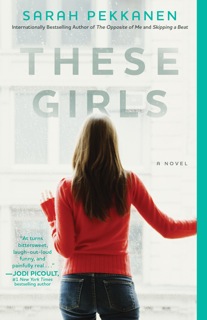
Sarah Pekkanen has quickly become a favorite author in women’s fiction. Realistic and relatable relationships are her specialty and in her most recent novel she tackles the ever-special bond between girlfriends. Work acquaintances, Cate and Renee, decide to rent a New York apartment together, but their friendship has stalled at simply roommates. The addition, however, of Abby, the mysterious and troubled sister of office playboy and Renee’s longtime crush, changes their life forever. As they...
Artists Paying It Forward: THE PROM
THE PROMBy Therese A. Barron One of the rights of passage for high school students is going to the Prom. Generally it’s a night of fantasy, drama and fun with dressing up, dancing and socializing with friends. It is not on everyone's "To Do List," but for many teens it’s an important event. For many it’s one of those rare occasions where they get to step outside of daily life and share in something out of the ordinary. Many teens, however, have been priced out of the market...
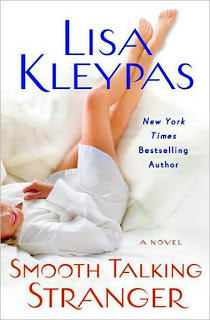
Smooth Talking Stranger By Lisa Kleypas
RED, WHITE, AND BLOOD By Christopher Farnsworth
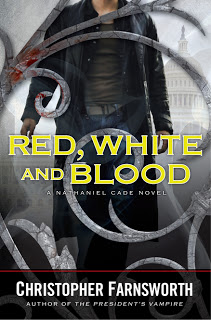
In Red, White and Blood, the third in his breathtaking Nathaniel Cade series, Christopher Farnsworth takes any paranormal expectations you might have and completely destroys them. In his fascinating and unrelenting novels, Farnsworth follows the life of a mysterious vampire, who just so happens to be the right hand man to the President of the United States. Unlike any cliché vampire novel on bookstands today, Farnsworth’s novels are smart, fast-paced and developed around some of the best characters in any work of fiction today.
Farnsworth’s brilliance has always been his ability to take real historical events and explain their paranormal twist. His characters are charming and so layered with personality that when the last page has passed, they stay in your mind for days on end. This series has proven to be in it for the long run.
Few books get me this excited, and I don’t even like vampires.
THE BIGGEST KISS BY JOANNA WALSH & JUDI ABBOT
The Biggest KissBy Joanna Walsh & Jodi Abbot Every creature loves a kiss."'Normous elephants do. Little tiny ants do." The Biggest Kiss by Joanna Walsh and Jodi Abbot puts into words and gorgeous illustrations, just how many kisses fill the world. From a "snow's kiss" to a "bye-bye kiss" all the way to a "fish kiss", children will love the imaginative thoughts and questions proposed in a sweet book for all ages. By the time the last page has been turned, the little ones in your life will be...
CHICKS RUN WILD BY SUDIPTA BARDHAN-QUALLEN
CHICKS RUN WILDWritten by Sudipta Bardhan-QuallenIllustrated by Ward Jenkins A large Momma Chicken puts her chicks to bed, quietly closes the door and....THE CHICKS RUN WILD!!! This incredibly fun, laugh-out-loud children's book is one for every kiddos bedroom. Kids will shout the words with dramatic passion as the sweet little chicks jump out of bed and reek havoc as their mother leaves them for bedtime. The hysterical illustrations, bright colors and vibrant rhymes grab the attention of little...
MY FAVORITE QUICK MEAL BY AUDI SWIFT OF MUDPIE MODERATION
MY FAVORITE QUICK MEALBy Audi Swift of Mudpie Moderation Most would not argue that cooking dinner for your family mid-week is a tough assignment. Especially in the midst of an extra busy one. I have mentioned before, that I have learned over time to be more strategic about my approach to cooking in order to feed my family healthful meals. I have learned to meal plan, to do my shopping for the week early on, and to be ok taking short-cuts in preparation steps when necessary. The...
REICH: CHAPTER EIGHT
REICH: A Novella CHAPTER EIGHT Hitler, blankly, stared up at an oil painting of himself. His own features glared down at him, making him feel almost unimportant. Perfect! It was the effect he had been looking for. No one mattered, but him. The office, Hitler noticed, was elegant, and nothing but the best was in its confines. He hated it! If not for the political duties, he wouldn’t even be there. He had come to see the Gestapo’s Puppet Leader of Norway.

More Background on LitFestMagazine.com
LitFestMagazine.com was an independent online cultural magazine that brought together three subjects its creators believed naturally belonged together: literature, food and music. Active during the early 2010s, Lit Fest Magazine was not simply a book-review website despite the literary emphasis suggested by its name. It functioned more like a small digital lifestyle and arts magazine, combining book criticism, author features, original writing, recipes, restaurant and food coverage, music writing, interviews and socially minded stories.
The site’s philosophy could be summarized by one of its memorable descriptions of itself: Lit Fest Magazine had its “noses in books, hands in the kitchen and ears to the ground.” That line captured both the personality and breadth of the publication. Rather than attempting to compete with large newspapers or established literary journals, Lit Fest offered an approachable form of cultural curation. Its writers sifted through books, music and food experiences and reported back on discoveries they believed readers would enjoy.
That approach made LitFestMagazine.com characteristic of an important period in Internet publishing. During the late 2000s and early 2010s, independent online magazines, blogs and specialty review sites increasingly provided authors, musicians and other creative people with publicity outside traditional newspapers and magazines. Lit Fest Magazine occupied that space while maintaining an unusually broad editorial mix.
Who Created Lit Fest Magazine?
Independent contemporary evidence identifies Amanda Goossen as the creator of LitFestMagazine.com.
In a December 2011 article published by Arcadia News in Arizona, Goossen was described as a stay-at-home mother of two young children who had created the “Lit, Music and Food” website LitFestMagazine.com. That contemporary description is especially useful in understanding the original publication because it confirms both its founder and its intended editorial identity.
Goossen also wrote book reviews for Lit Fest Magazine. Surviving reviews attributed to her include coverage of Scott L. Collins' novel “Days’ End” and Vicki Tyley’s thriller “Sleight Malice.” Her work suggests that Lit Fest was built around enthusiastic, reader-oriented criticism rather than academic literary analysis.
The magazine nevertheless involved other contributors. Therese A. Barron, for example, wrote music and human-interest material associated with the publication. This supports the magazine’s description of itself as a collective or consortium of people interested in literature, food and music rather than simply a personal book blog.
Goossen’s connection with Arizona provides the clearest geographical context for the publication. Contemporary reporting places her in the Phoenix-area cultural and food scene, and her later journalism included food and community writing for Arcadia News. Lit Fest itself was an online publication rather than a conventional magazine tied to a storefront or public editorial office, so its potential audience extended far beyond Arizona.
The Magazine's Editorial Mission
Lit Fest Magazine presented discovery as one of its central purposes.
The Internet had already created an abundance problem by 2010: readers could find thousands of book recommendations, recipes, restaurant reviews, songs and entertainment choices. Lit Fest positioned its editors as filters who would search through that abundance and recommend worthwhile discoveries.
Literature was central to that mission. The magazine reviewed established writers while also making room for emerging authors and less familiar books. Its editorial philosophy emphasized both finding new writers and acknowledging established names.
The food section followed a similarly practical approach. Recipes were supposed to be tried and enjoyed before receiving the magazine’s endorsement. The site's food orientation therefore complemented its book coverage: Lit Fest was not simply reporting cultural news but recommending things readers could actually read, cook, eat or listen to.
Music completed the formula. Its music coverage was deliberately broad rather than restricted to one genre. New performers could appear alongside overlooked recordings and older favorites.
Together, these departments gave Lit Fest Magazine a personality that differed from a traditional literary journal. It treated books as one part of everyday cultural life rather than isolating literature from other interests.
Book Reviews and Literary Coverage
Book reviews were among the site's most visible features and provide some of the best surviving evidence of Lit Fest Magazine's editorial voice.
The magazine covered a surprisingly broad range of genres. Its archives included children's books, women's fiction, suspense, thrillers, paranormal fiction and other popular literature. This was not a publication interested only in traditionally prestigious literary fiction.
For example, Amanda Goossen reviewed Scott L. Collins' “Days’ End,” a science-oriented suspense novel. Her review praised the research underlying the story and its ability to connect questions involving science, greed, mortality and human motivation. A surviving Goodreads record preserves the review and attributes it directly to Goossen writing for Lit Fest Magazine.
The magazine also reviewed Australian writer Vicki Tyley's “Sleight Malice.” Lit Fest praised Tyley's ability to construct complex characters and suspense. The review acquired a life well beyond the original website: promotional material for the book subsequently quoted Lit Fest Magazine, and versions of that endorsement have continued to appear on bookselling and author-related pages years later.
That is a significant measure of Lit Fest's influence. Although it was a comparatively small independent publication, authors and publishers considered favorable comments from the magazine useful enough to reproduce in marketing material.
Lit Fest also reviewed Syrie James' “Dracula, My Love,” a reinterpretation of Bram Stoker's Dracula story. A favorable Lit Fest quotation from that review remains preserved among the author's collection of reviews.
Children's literature was another noticeable part of the site. Archived material includes books such as “The Biggest Kiss” by Joanna Walsh and Judi Abbot and “Chicks Run Wild” by Sudipta Bardhan-Quallen and Ward Jenkins. The result was a literary section that could serve parents looking for children's books as easily as adult readers looking for thrillers or contemporary fiction.
Direct Participation by Authors
Lit Fest Magazine did more than review authors from a distance. It also provided writers with opportunities to communicate directly with readers.
One particularly well-documented example involved bestselling fantasy author Kim Harrison.
In February 2011, Harrison announced on her own blog that she was contributing guest posts to LitFestMagazine.com. She described the first as the beginning of a four-part guest-post series. One installment discussed urban fantasy and its popularity, while another explored promotional items connected with releases in her Hollows series.
The importance of this surviving reference goes beyond the individual posts. Harrison was already a prominent genre author. Her decision to direct her readers to LitFestMagazine.com demonstrates that the publication had enough visibility and editorial credibility to participate in author promotion and book-release conversations.
It also illustrates Lit Fest's more informal relationship with authors. Rather than limiting itself to reviews, the magazine could provide authors with space to explain their genre, creative process or relationship with readers.
Opportunities for Emerging Writers
One of the more culturally important aspects of Lit Fest Magazine was its willingness to publish original writing and encourage submissions.
Contemporary writing-contest announcements show that the magazine actively solicited material from writers.
In September 2010, Lit Fest ran several competitions. One invited writers to submit an original article about a favorite local bookstore. The magazine planned to publish four selected entries during October. This contest reflected Lit Fest's broader support for independent bookselling and community literary culture.
Another contest requested a 1,500-word horror story, again with selected entries scheduled for publication.
The magazine also conducted book giveaways, providing another mechanism for connecting writers, books and readers.
By September 2011, Lit Fest was soliciting short stories or articles of up to 3,000 words for a weekly feature. The selected submission would appear in the magazine's “Weekly Short Story” column.
This transformed the publication from a recommendation site into a modest publishing platform. Readers were not necessarily passive consumers; aspiring writers could submit their own work and potentially appear alongside the site's regular editorial material.
Evidence of that role survives elsewhere on the web. Writer Connor Ludovissy, for example, later listed LitFestMagazine.com among the publications in which his stories had appeared.
Serialized Fiction
Lit Fest Magazine also experimented with serialized fiction, a publishing tradition that long predates the Internet but found a natural new home online.
Author Donald Allen Kirch promoted “Reich: A Serialized Novella” as appearing each month in Lit Fest Magazine. The supernatural historical story combined the final days of Nazi Germany with horror and vampirism.
Kirch also described another work, “The Silent Pulpit,” as a serialized novella that had first been introduced through Lit Fest Magazine before subsequently becoming an ebook.
This illustrates another function of small online magazines during this era. They could provide writers with a testing ground and an initial audience before material was collected or republished in another format.
Serialized fiction also encouraged repeat visits. Instead of encountering a single review through a search engine and leaving, readers interested in an ongoing story had a reason to return for the next installment.
Music Coverage
Music was not merely an occasional diversion on Lit Fest Magazine. It was one of the publication's three declared areas of interest.
The magazine's music writing included artist profiles, performance coverage and pieces with a social dimension.
Therese Barron's review of the Reall Deall Band with Hook, for example, survives through later entertainment-industry references. Barron focused on the performers' energy, vocal harmonies and evident enjoyment of performing together.
Another notable feature concerned musician Gary Allegretto and Harmonikids, the nonprofit initiative through which Allegretto brought harmonicas and music education to children facing difficult circumstances.
That story exemplified Lit Fest's “Artists Paying It Forward” coverage. Instead of concentrating exclusively on albums, celebrities or entertainment news, the magazine explored how musicians and other creative people could use their work for community benefit.
This broadened Lit Fest's cultural mission considerably. Music was treated both as entertainment and as something capable of building confidence, connecting people and improving lives.
Food, Recipes and the Phoenix Connection
Food completed the publication's three-part editorial structure.
Lit Fest promised recipes suitable for different abilities and tastes, along with commentary on restaurants and culinary discoveries. The magazine emphasized recipes that had actually been tried rather than simply aggregated from elsewhere.
Amanda Goossen's food journalism provides additional context for this interest. Her December 2011 Arcadia News article explored gingerbread-related foods around the Phoenix area, including cookies and locally produced ice cream. That article also explicitly identified her as the creator of LitFestMagazine.com.
This Phoenix connection helps explain how the site's combination of food, family life and literature could emerge naturally from Goossen's broader interests.
Unlike specialized culinary publications, however, Lit Fest did not require readers to identify themselves primarily as “foodies.” Someone arriving for a novel review could discover a recipe; someone interested in music could encounter children's books. Cross-pollination was part of the site's appeal.
Audience and Popularity
No reliable surviving public traffic figures have been found that would justify describing LitFestMagazine.com as a mass-market website, and it should not be presented as though it competed in audience size with major national publications.
Its influence is better measured through its network of connections.
Authors linked to Lit Fest. Writers credited it as a place where their work had appeared. Publishers and booksellers reproduced quotations from its reviews. Writing-contest websites circulated its calls for submissions. Musicians and entertainment businesses preserved references to its coverage.
Goodreads also retains traces of Lit Fest Magazine's reviewing activity. The surviving account is associated with multiple reviews and followers, providing another indication that the magazine participated in the emerging social-book ecosystem of the period.
This type of distributed evidence is particularly valuable when reconstructing the history of a discontinued website. A site's original pages may disappear, but references made by authors, publishers, readers and other publications can preserve evidence of what it did and how people interacted with it.
Reviews and Reputation
There is little evidence of conventional media reviews evaluating LitFestMagazine.com itself. Its reputation instead appears indirectly through the way other people reused its work.
A favorable book review from Lit Fest could become promotional copy.
An author could send readers to the magazine for a guest essay.
A novelist could advertise that a serialized story appeared there.
An emerging writer could mention publication by LitFestMagazine.com in a professional biography.
These examples suggest that Lit Fest accumulated a recognizable identity within portions of the online literary community even without the scale of a major literary publication.
Its tone probably helped. The reviews were enthusiastic and accessible. Lit Fest approached books as something to recommend to real readers rather than as objects requiring detached academic criticism.
Awards and Recognition
There is no solid evidence that LitFestMagazine.com itself received a major national magazine or literary award, so claims that it was an “award-winning magazine” would be inappropriate without additional documentation.
The people and subjects appearing in its pages, however, sometimes had significant credentials and recognition. Its coverage could range from bestselling authors to musicians engaged in recognized charitable work.
Amanda Goossen later developed a journalism career that included community and food writing in Arizona and subsequently received journalism recognition, but those later honors should be distinguished from Lit Fest Magazine itself rather than retroactively treated as awards won by the website.
The stronger measure of the site's standing is the persistence of its editorial endorsements. More than a decade later, Lit Fest quotations remain attached to some books and authors online.
Navigation and Content Structure
The archived material suggests a straightforward editorial structure built around the publication's major interests rather than an elaborate newspaper-style hierarchy.
The principal content areas revolved around literature, food and music. Within those broad areas readers could encounter reviews, features, recipes, author contributions, original fiction and special series.
Recurring concepts such as “Artists Paying It Forward” and serialized fiction gave the site identifiable features beyond ordinary reviews.
This relatively simple organization made sense for an independent online magazine. Its identity did not depend upon having dozens of departments. Readers understood the basic proposition quickly: discover something worthwhile to read, eat or hear.
Cultural and Social Significance
LitFestMagazine.com's greatest significance may be understood in the context of independent Internet publishing around 2010–2012.
Social media had not yet assumed its present role in book discovery. BookTok did not exist. Instagram had only recently launched. Authors, publishers and readers relied heavily on blogs, online reviewers, Goodreads, specialist forums and independent cultural websites to circulate recommendations.
Sites such as Lit Fest formed part of that ecosystem.
They lowered the barrier between creators and audiences. A bestselling author and an unknown short-story writer could potentially appear on the same independent website. A self-published or small-press novelist could obtain a review that might later become promotional material. Readers could discover books outside the limited inventory displayed on the front tables of major bookstores.
Lit Fest also reflected the growing tendency to combine cultural subjects that traditional publishing had often separated. Literature, cooking and music were presented as complementary pleasures.
The result anticipated the lifestyle-oriented digital publishing that became increasingly common later in the decade.
Why LitFestMagazine.com Is Still Worth Remembering
LitFestMagazine.com represents a type of independent web publishing that is easy to underestimate after the original site disappears.
It was not simply a collection of old book reviews. Surviving evidence shows a more ambitious operation: book criticism, children's recommendations, author guest posts, writing contests, serialized fiction, music coverage, charitable artist profiles, recipes and food writing.
Most importantly, it participated in a network.
Amanda Goossen and her contributors recommended books and artists. Authors sent their audiences to Lit Fest. Aspiring writers submitted stories. Publishers reused review quotations. Other websites circulated Lit Fest's contests. Writers later cited the magazine in their biographies.
That network is the clearest evidence of the publication's relevance.
Lit Fest Magazine belonged to an era when a relatively small group of passionate editors could build an online publication around enthusiasm rather than scale. Its central promise was simple: there were more books, songs and recipes in the world than any one person could discover alone, so the magazine would do some of the searching.
For readers interested in the history of online literary culture, LitFestMagazine.com offers a useful snapshot of that period. It shows how independent websites could connect authors, readers, musicians, cooks and emerging writers before today's highly centralized social-media discovery systems became dominant.
The original Lit Fest Magazine may belong to an earlier generation of the web, but traces of its reviews, contests, contributors and author relationships remain scattered across the Internet. Those surviving references reveal a publication that was small enough to be personal, broad enough to move beyond books alone, and connected enough that some of its recommendations and reviews have outlived the original site itself.